Top Loaded Boards for Skateboarding Enthusiasts


Intro
Delving into the world of skateboarding often feels like peeling back layers of culture, creativity, and engineered craftsmanship. For enthusiasts, the loaded board is more than just a piece of equipment; it's a reflection of personal style and aspirations on the pavement. With a wide range of designs, materials, and construction techniques, understanding the intricacies of loaded boards can greatly enhance one’s riding experience.
This guide aims to illuminate the best loaded boards currently available, breaking down the unique attributes and performance benchmarks that such boards offer skaters. It’s crucial for all performance levels—from greenhorns just finding their footing to the seasoned riders executing jaw-dropping tricks—to make informed decisions about their gear. By analyzing the best boards on the market, we seek to align those choices with the evolving needs and preferences of skateboarders everywhere.
Skateboarding Techniques
Mastering Tricks
Every skater dreams of mastering tricks that make them stand out in their community. From ollies to kickflips, every trick requires a solid grip on the board, and much of that depends on the type of loaded board one rides. The right board can make the difference between sticking that gnarly trick or eating pavement.
Tips for Mastering Tricks:
- Choose the Right Board: A board with proper flexibility can give more support for dynamic movements. Loaded boards like the Loaded Dervish or the Loaded Tan Tien offer various options for different tricks, giving you the spring and grip you need.
- Practice, Practice, Practice: It sounds cliché, but regular practice on your loaded board will help you adapt to its quirks and capabilities.
- Foot Placement Matters: Experiment with where you place your feet. Even a slight shift can impact your balance drastically.
Improving Balance and Stance
Developing a keen sense of balance is crucial in skateboarding. A loaded board designed with a wider wheelbase can offer more stability. For instance, the Loaded Vanguard is noted for its symmetrical design, which serves to enhance balance-making maneuvers like slides and turns.
Balance-Boosting Techniques:
- Focus on Your Core: Strengthening your core will lead to improved balance. Yoga and pilates can be beneficial complements to skateboarding.
- Stance Variation: Try riding with different stances – regular and goofy. This will not only improve balance but also enhance overall versatility on the skateboard.
Skateboard Gear and Reviews
Latest Skateboard Models
Loaded bases its identity on innovation. Their latest models come with features that cater to the varied demands of skateboarders. The Loaded Iliad is a fine example, pushing boundaries with its cutting-edge materials designed for ultimate durability while providing a lively ride.
Recommended Loaded Models:
- Loaded Dervish: Customizable for different styles, ideal for commuting and freeriding.
- Loaded Bhangra: A favorite among dancers and freestyle riders, offering flexibility without compromising stability.
Essential Protective Gear
Skateboarding isn't without its risks, which is why protective gear is paramount. Protective gear goes beyond just helmets. Ensure you invest in high-quality knee pads and wrist guards.
"Investing in good protective equipment can mean the difference between a minor scratch and a serious injury."
Protective Gear Checklist:
- Helmets should fit snugly and have proper certifications.
- Knee pads help absorb impact during falls, especially for beginners.
- Wrist guards can prevent sprains and fractures, providing additional support during tricks.
Prelims to Loaded Boards
Loaded boards represent a remarkable fusion of design, performance, and creativity specifically tailored for skateboarding enthusiasts. When you really think about it, a skateboarding board isn't just a piece of wood with wheels; it's a personal extension of the rider. Every curve and contour plays a crucial role in how the rider interacts with the environment, be it for cruising down a street or carving on a hill. This article aims to explore these boards thoroughly, spotlighting their unique attributes, and discussing the multitude of options available for every kind of skater, from newbies testing the waters to seasoned pros looking to amplify their experience.
Understanding loaded boards is beneficial for several reasons. First and foremost, these boards are designed to enhance the riding experience. Loaded boards frequently utilize innovative materials which can alter the feel of a ride. This can result in enhanced stability at high speeds, more comfort over rough terrain, and better feedback from the board. It's mindful choices like these that can elevate a simple skateboarding session into something extraordinary.
Moreover, recognizing the specific features that differentiate loaded boards helps in making well-informed purchasing decisions. With the vast number of brands and models flooding the market, identifying what fits one's riding style, weight, and experience level becomes paramount. The importance cannot be understated, as a poor choice can lead to uncomfortable experiences or even injuries.
The design elements of loaded boards also reflect broader trends within skate culture. They often incorporate vibrant graphics and unique shapes which speak to individual style and preferences, thereby influencing aesthetic choices among riders. Thus, it's not just about functionality; the personal connection a skater has with their board shapes the larger narrative of their skateboarding journey.
In summary, an exploration into loaded boards is not merely a procurement guide. It is an invitation to dive into a deeper understanding of how design, technology, and style interrelate in the world of skateboarding. By the end of this article, readers will have a clearer picture of what to consider when selecting their optimal loaded board, ensuring they have the best tools for their next ride.
Defining Loaded Boards
When we talk about loaded boards, we refer to a category of skateboards that are intentionally engineered for performance, comfort, and versatility. Unlike traditional skateboards that might focus mainly on tricks and urban riding, loaded boards are designed for a range of activities which include downhill racing, carving, and other longboarding purposes. The distinction lies in their construction; for instance, many loaded boards use premium materials such as bamboo, fiberglass, and carbon fiber, resulting in lightweight yet durable constructions.
Furthermore, the term "loaded" typically implies the board’s ability to accommodate various setups. Whether one prefers larger wheels for a smoother ride or smaller ones for tighter turns, flexibility in design allows for a multitude of configurations suited to different riding styles.
Historical Context of Loaded Boards
In the realm of skateboarding, the evolution of loaded boards traces back to the late 1970s and 1980s when skateboarding began to diversify beyond the standard wooden decks. Originally, skateboards were crafted with a focus on tricks and stunts, but as the longboarding movement gained momentum, enthusiasts began seeking out boards with improved stability and comfort.
Loaded Boards, as a brand, emerged in the early 2000s and quickly became synonymous with high-quality longboards. Their designs drew on historical influences from surfing and snowboarding, two sports that prioritize smooth carving and control. This cross-pollination of ideas reflects a broader trend in the action sports world, as skaters sought out different experiences and adaptations of technology from other disciplines.
With each passing year, advancements in technology have further entrenched loaded boards into the skateboarding community. The integration of innovative materials and construction methods has allowed for boards that perform better over a variety of terrains, making them an increasingly popular choice among both casual riders and serious athletes. Today, brands continue to expand their offerings, making it a more dynamic field filled with multiple styles that cater to specialized preferences.
Key Features of Loaded Boards
When it comes to loaded boards, one can't simply overlook the features that set them apart from ordinary skateboards. Loaded boards are known for their unique design elements that cater to both performance and comfort. Whether you're carving down a hill or cruising through the park, the right features can make all the difference in your riding experience. Understanding these characteristics helps skaters, beginner or advanced, to select the best board suited to their needs.


Material Composition
The materials used in the construction of a loaded board play a crucial role in its you may say durability, weight, and performance. Usually, loaded boards combine several materials like bamboo, fiberglass, and hard rock maple.
- Bamboo is popular for its lightweight and flexible nature, giving boards a springy feel that soaks up vibrations.
- Fiberglass is often added to reinforce the board, providing strength without heft.
- Hard rock maple adds a level of stiffness and durability that allows for better control at higher speeds.
Choosing the right material means considering the riding environment and personal comfort. For instance, riders often seeking tricks or aggressive turns may prefer a stiffer board for immediate response while cruising skaters might appreciate the flexibility of bamboo. The combination of material affects not just how the board rides but also its responsiveness during different tricks or maneuvers.
Shape and Flexibility
The shape and flexibility of loaded boards can dramatically alter performance. Boards come in various shapes—from flat to contoured—and this affects how the skateboard behaves under pressure. For instance, a wide nose and tail provide superior balance and stability, which is fundamental for those who do freestyle or need to perform aerial tricks.
Flexibility is another pivotal factor. A board with more flex will absorb shocks better, making it a good choice for downhill riding or rough terrain. A stiffer board, on the other hand, typically offers more responsiveness and control, which can be favorable for tricks. Here are some considerations:
- Drop-through boards lower the center of gravity, providing stability at speed.
- Concave shapes enhance foot grip, allowing for more precise maneuvers.
- Directional shapes lend themselves well to downhill riding and carving.
Each rider ought to consider their style and the terrain they'll be rolling on when choosing a board shape. If you prefer elaborate tricks, a poppy, shorter board may suit you, but for long-distance carving, a flexible, elongated option could be the ticket.
Wheel Specifications
Wheels may seem secondary, but they are vital to the overall experience of riding a loaded board. The durometer, or hardness of the wheels, significantly affects grip and comfort. Softer wheels (78A to 87A) absorb more shock, providing a smoother ride over rough terrains, which is ideal for cruising or commuting. Harder wheels (88A to 101A) are perfect for parks and street skating, giving you that precise control needed for tricks.
- Diameter plays a role too; larger wheels roll over obstacles easier while smaller wheels offer better pop for tricks.
- Material is often urethane, chosen for its grip and durability. Different formulations can change the behavior of a wheel significantly.
Ultimately, the choice of wheel impacts not only what surfaces you can ride on but also how you experience your ride. Make sure to consider what kind of terrain you’ll hit the most before making your wheel selection.
"The right combination of features determines how you interact with the board, making each ride uniquely yours."
Understanding these key features--material composition, shape, flexibility, and wheel specifications--is crucial to making an informed purchase. They not only affect the technical aspects of riding but also how enjoyable your experience on the board will be.
Performance Aspects
When it comes to skateboarding, the performance of your board can make or break your ride. This section delves into the key performance aspects of loaded boards—stability, speed, maneuverability, and durability. Each of these elements plays a critical role in defining how well a board performs across different styles and conditions, giving riders a clearer sense of what they should look for.
Stability and Control
Stability is often the first thing that skaters notice when hopping on a loaded board. A stable board provides a solid foundation, which is especially important for beginners. It allows new skaters to gain confidence as they learn to balance and control their movements. A well-crafted board that emphasizes stability can help prevent nasty falls that might deter someone from pursuing the sport.
There are several factors that influence stability:
- Width of the Deck: A broader deck can provide a more stable platform for your feet. Think of it as standing on a sturdy platform as opposed to a tightrope.
- Low Center of Gravity: Loaded boards tend to have a lower profile, preventing unwarranted wobbling, which is essential for tricks and freeriding.
- Trucks Configuration: The type and setup of the trucks can significantly impact how a board handles. A proper alignment keeps you grounded, especially in tight turns.
The importance of stability can't be understated as it directly connects to how a skater builds trust in their board.
Speed and Maneuverability
Speed is the lifeblood of skateboarding. Many enthusiasts crave the sensation of gliding swiftly through the streets, and achieving this feeling largely falls on the performance of the board. Loaded boards are known for their ability to maintain high speeds without compromising control.
Maneuverability is equally crucial. As you roll down a hill or navigate through a crowded path, the ability to make rapid turns can be the difference between a smooth ride and disaster. Here are some considerations:
- Wheel Hardness: Softer wheels can grip better and absorb bumps, while harder wheels can roll faster on smooth surfaces—finding the right hardness based on your environment is key.
- Tail and Nose Shape: A well-shaped board allows for sharp turns without sacrificing speed. The design can enhance how quickly a skater can transition from cruising to turning.
- Flex: Many loaded boards offer varying degrees of flex, which can influence how quickly and sharply a board responds to a skater's commands.
Achieving the right balance of speed and maneuverability can elevate one’s skating experience, helping riders reach new personal records or perform tricks with ease.
Durability Under Various Conditions
A loaded board must stand the test of time and usage under diverse conditions. Durability often hinges on material choices and build quality, ensuring that the board can weather the elements and rough treatment. Here’s what you should think about:
- Material Strength: High-quality maple and bamboo are common choices for construction due to their ability to withstand impacts and stresses.
- Water Resistance: Some boards are designed to handle moisture better than others, making them suitable for various weather conditions. Riding after a rain or in humid weather can be a consideration for those living in wet climates.
- Resistance to Scratches and Dents: A hard-wearing finish can keep a board looking fresh far longer, allowing it to endure bumps and scrapes.
"Durability speaks volumes about a board's capacity to endure and excel, even when conditions are subpar."
Skaters have varied needs based on where they ride—whether in urban jungles or scenic trails—making this aspect crucial for anyone deciding on a loaded board.
In summary, understanding these performance aspects allows skaters to make informed choices based on their individual needs, skill levels, and riding styles. By factoring in stability, speed, maneuverability, and durability, enthusiasts can select a loaded board that not only enhances their experience but also keeps them safe.
Comparing Popular Loaded Board Brands
When it comes to dedicated skateboarders, making an informed decision about which loaded board to choose can feel like navigating a maze. With a plethora of brands offering their own distinct characteristics and innovations, comparing popular loaded board brands allows skaters to discern the nuances that set them apart. The benefits of this comparison extend beyond mere preferences; they encompass important considerations such as riding styles, durability, and even brand reputation in the skateboarding community. Examining brands in detail can ultimately lead to a more tailored choice that resonates with your individual needs, whether you're a weekend rider or a competition enthusiast.
Brand A Overview
Brand A, known for its innovative designs, has carved out a sizable niche among skaters. Their boards often feature an asymmetrical shape, catering to various riding styles, from casual cruising to aggressive carving. This brand utilizes a unique composite material that enhances both stability and flexibility. Additionally, Brand A incorporates a specialized grip technique on their decks, which improves traction, making it easier to maintain control during intricate tricks and turns. Their widespread popularity among beginners can be attributed to their emphasis on usability and comfort. Many users report that their initial experiences are positive, as these boards facilitate learning new skills more seamlessly.
Brand B Overview
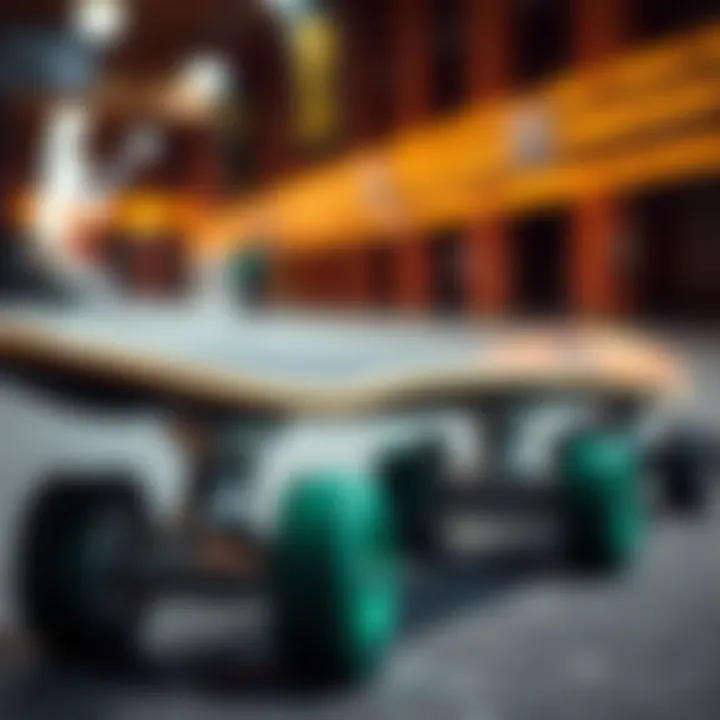
Moving on to Brand B, which has gained attention for its commitment to environmental sustainability. They utilize eco-friendly materials, emphasizing bamboo and recycled composites to construct their decks. As a result, these boards not only showcase appealing aesthetics but also stand out for their responsiveness and shock absorption. Skaters who prioritize conscious consumption often gravitate towards Brand B. A unique offering is the board's customizable flex options, allowing riders to choose the right amount of give based on their weight and riding style. Feedback from users suggests that this flexibility, combined with lightweight build, leads to an enjoyable experience, especially for longer rides.
Brand Overview
Brand C stands tall in the competitive landscape with its offerings built for performance-driven riders. Well-recognized for their strong emphasis on speed, these boards boast sophisticated wheel technology that enhances roll speed and grip. With hard durometer wheels, riders looking for sharper turns and quick acceleration often find themselves reaching for Brand C boards. The construction primarily focuses on aluminum for trucks, providing exceptional durability and stability during intense rides. Among professional riders, Brand C enjoys a loyal following, with many appreciating the balance between responsiveness and sturdiness, which is essential when faced with demanding tricks.
"Choosing the right brand can significantly impact one’s riding experience, providing not just enjoyment but also deepening the love for skateboarding itself."
User Recommendations and Experiences
The insights shared by skateboarders, both novice and seasoned, provide invaluable guidance for those navigating the intricate world of loaded boards. User recommendations specifically shine a light on real-world application, transcending technical specifications explained in product descriptions. When skaters discuss their experiences, they contribute to a collective understanding of what works and what doesn't, underscoring the personal attachment many have towards their boards.
Experiences shared in online forums, social media platforms like Facebook and Reddit, and skateboarding communities play a crucial role in shaping expectations. For instance, when someone mentions how a board performed during a downhill run versus a trick session, it offers clarity regarding a board's versatility. More importantly, these recommendations can suggest features that may not be highlighted by manufacturers directly.
Beginner Skater Experiences
For those just dipping their toes into skateboarding, first-hand accounts can be a game changer. Beginner skaters often look for comfort and ease when selecting a board. Stories shared by newbies frequently mention a preference for stability and a smooth ride.
Many beginners might often find themselves overwhelmed by the plethora of options. By hearing from others who started similarly, they can glean advice on which boards truly cater to beginners. A common theme here includes models like the Loaded Tan Tien. With a flexible bamboo construction and a concave shape, the Tan Tien has been widely praised for being user-friendly—ideal for those who are still finding their footing.
Moreover, many first-time users tend to recommend taking their time learning the basics, instead of jumping straight to advanced tricks. Simple suggestions, like learning to balance properly and gradually progressing, can make a world of difference. Simple anecdotes about falling during the learning process can serve to embolden others, lending courage to new skaters.
Expert Skater Feedback
When it comes to the more experienced crowd, feedback takes on an entirely different shade. Expert skaters, who’ve spent years perfecting their craft, often focus on performance metrics such as speed, maneuverability, and durability under rigorous conditions. Their narratives can dissect everything from wheel durometer ratings to the flex patterns of a board's deck.
For instance, advanced users might highlight the Loaded Vanguard for its drop-through design, which they emphasize as being perfect for carving and cruising at high speeds. The added stability allows them to be daring without compromising control, which is symbolic of the skill level they possess.
Conversely, expert recommendations can also critique aspects that might mislead or dilute the fundamental joy of skating. They often advise against boards that, while visually stunning, sacrifice performance for aesthetics. Recommendations also extend to the importance of personal fit and comfort. A board that feels good underfoot, providing adequate grip and flex can be pivotal for serious skaters aiming for progression.
Ultimately, the feedback from expert skaters not only guides newer enthusiasts towards the right boards but also instills a sense of what to aspire to in terms of performance. As users share their experiences, whether as newcomers or veterans, it enriches the culture surrounding loaded boards, encouraging a community driven by shared learning and respect for one another's journeys.
"Skateboarding is a journey, and each board tells a part of that story. Listen to others, but find your own path."
In summary, both beginner and expert insights are critical in the journey of finding the perfect loaded board. They provide relevant context and personal stories that help others make informed choices.
Best Practices for Choosing a Loaded Board
Choosing the right loaded board can feel like navigating a maze without a map, especially for those new to skateboarding or even for seasoned riders wanting a fresh ride. Having a well-thought-out approach can make all the difference between a thrilling experience and a frustrating one. It's not just about picking the most colorful board or the trendiest brand; it's about understanding what fits your personal style and skill level.
Firstly, understanding the features of loaded boards typically takes a back seat in many discussions, but it’s essential. Boards come in various shapes, materials, and flexibilities, all of which cater to different skateboarding styles. Educating oneself on these elements helps to narrow down options significantly, and that leads to smarter buying decisions.
Assessing Your Skill Level
Before diving into the sea of options, it’s crucial to take a moment to assess your own skill level. Are you just beginning to get your bearings or are you already pulling off tricks that make jaws drop at the skatepark?
- Beginners should look for stability and ease of use while they build their foundational skills.
- Intermediate skaters might want a board that allows for more tricks and agility to elevate their game.
- Advanced skaters, on the other hand, often seek high-performance boards that push the limits in speed and trick execution.
This self-assessment can help steer your choice toward a loaded board that won't leave you feeling like a fish out of water.
Identifying Your Riding Style
Once you've gauged your skill level, the next step is to identify your riding style. Different riders tend to have different preferences and styles, often depending on what they find most enjoyable or exhilarating.
- Cruising: If you lean towards relaxed rides in the park or around town, consider a board with a wider deck for stability and smooth transitions.
- Freestyle: Those who love to show off tricks will benefit from a board designed for agility, typically with a shorter, more flexible body.
- Downhill: If speed is your game, look for boards that are sturdy and provide excellent grip, usually found in longer boards with a lower center of gravity.
Finding the right fit increases your enjoyment and boosts your confidence as you hone your skills.
The right loaded board feels like an extension of your own body—one that enhances every flick of your foot and pushes you to greater heights.
Customizing Your Loaded Board
Customizing your loaded board is not just a cosmetic upgrade; it can fundamentally affect your skating experience. Many skateboarders view their board as an extension of their personality. Choosing specific elements and modifications allows for a unique representation in addition to enhancing performance. The process of customization can boost confidence on the board, leading to improved tricks and overall enjoyment.
Selecting Accessories
When it comes to accessories, the choices available seem almost limitless. From grip tape to bushings, every component can be tailored to suit your specific needs or preferences. Consider these key accessories:
- Grip Tape: Essential for maintaining control. You might opt for a high-grit option for rough terrain, or a softer one if street is more your jam.
- Wheels: Are you looking for a smooth ride? Soft wheels are ideal for cruising, while harder wheels might be your best bet if you want to perform tricks.
- Trucks: Explore different widths and heights depending on your riding style. Lower trucks help with stability during rounded turns, while higher ones provide better leverage for ollies.
- Bearings: The right bearings assure smooth rolls. Look for precision ratings like ABEC-5, ABEC-7, or even ABEC-9, depending on how fast you want to fly down hill.
Selecting the right accessories can make a significant difference; choose what aligns with your style and enhances your expertise on the board.
Personalized Graphics and Art
Personalization doesn’t stop at functional components. Adding custom graphics and art brings another layer of character to your loaded board. Whether you decide to design your image or select from a multitude of pre-existing designs, this element allows you to show off your individuality.


- Stickers and Decals: A quick, easy way to add flair. Just make sure they are skate-friendly; you don’t want them peeling off just after your first ollie.
- Custom Paint Jobs: If you’re feeling particularly bold, consider a complete paint job. Use quality spray paints and be sure to seal them to protect from wear and tear.
- Artistic Influence: Many skaters get their friends or local artists involved to paint designs, representing community vibes or personal stories.
Investing time in customizing your board can lead to a unique ride that stands out in any crowd. As the saying goes, your board is a reflection of who you are. Make sure it speaks to your individuality on every ride.
Maintaining Your Loaded Board
Proper maintenance of a loaded board is integral to keeping it in peak condition for optimal performance and durability. Regularly caring for your loaded board will not only extend its lifespan but also enhance your riding experience, whether you’re cruising down the street or carving up the local skate park. This section outlines key methods to keep your board performing at its best.
Regular Cleaning Procedures
Keeping your loaded board clean is a straightforward yet often overlooked task. Just like a well-oiled machine, your skateboard deserves a little TLC to minimize dirt and grime accumulation, which can affect its handling and longevity. Here are some effective cleaning tips:
- Materials You Will Need: A soft cloth, mild soap, and water. If you’re using water outdoors, make sure to dry your board afterward.
- Step-by-Step Process:
- Remove any loose dirt or debris with a dry cloth or brush.
- Create a soap solution using mild soap mixed with water.
- Dampen the cloth in the solution and gently wipe down the board, avoiding the grip tape as it can get slippery when wet.
- Rinse the cloth with clean water and wipe down again to remove soap residue.
- Allow the board to dry completely before riding it.
Keeping your board free of dirt and contaminants helps preserve the aesthetics of your ride and keeps the components functioning smoothly.
Checking for Wear and Tear
Just like any piece of equipment, loaded boards endure wear and tear with use. Regular checks for damage can prevent complex problems down the line. Knowing what to look for is key:
- Deck Condition: Examine the board for any cracks or chips, especially near the edges. Small imperfections can lead to larger issues if left unchecked.
- Grip Tape: Inspect the grip tape’s surface for loss of stickiness. If it feels worn or slick, it may be time for a change.
- Wheels and Bearings: Check wheels for flat spots or uneven wear. Spin them to feel for any resistance; that may be a sign the bearings need cleaning or replacing.
- Trucks: Ensure the trucks are securely attached and examine for any bends or warping. Proper alignment is crucial for control.
By proactively monitoring your loaded board’s integrity, you can enjoy a smoother ride while avoiding unnecessary repairs.
"An ounce of prevention is worth a pound of cure."
These maintenance routines may seem simple, but they are vital to preserving the efficiency and performance of your loaded board. Taking the time to care for your board means your time riding can be more enjoyable and worry-free.
The Cultural Impact of Loaded Boards
The cultural significance of loaded boards extends far beyond their practical use in skateboarding. These boards are not only vehicles for personal expression but also reflections of trends within communities and the culture at large. Understanding their impact gives insight into the evolution of the sport and its enthusiasts.
Loaded Boards in Skateboarding Communities
Within skateboarding circles, loaded boards often serve as a symbol of the sport itself. They foster a sense of identity among skateboarders, creating bonds forged from shared experiences. For many, choosing a loaded board is comparable to picking a team; it is a badge of honor that encapsulates a rider's style and philosophy. When someone rolls up on a Loaded Vanguard or a Tan Tien, it announces their commitment to craftsmanship and performance.
Moreover, these boards encourage an inclusive community spirit. Riders frequently share tips and modifications, leading to collaborative events where skaters come together to showcase their skills. Local skate shops often host showcases, drawing in enthusiasts from all walks of life. This engagement strengthens the bonds among skaters, promoting camaraderie that transcends age and skill level.
- Community Events: Annual competitions and meet-ups encourage connections.
- Online Forums: Platforms like Reddit provide areas for discussion and camaraderie among skaters.
The ability to customize these boards also influences how communities express themselves artistically. It's common to see unique graphics or personalized accessories that reflect local culture or social causes. This is where skateboarding communities merge creativity with activism, giving a voice to important issues through their gear.
Influence on Skateboarding Culture
Loaded boards have reshaped how skateboarding is perceived in popular culture. Initially rooted in counterculture, skateboarding has transformed into a mainstream phenomenon, being featured in films, music, and fashion. Loaded boards are at the forefront of this evolution, appealing to both traditional riders and newcomers drawn in by their innovative designs.
The promotion of progressive riding styles has also ushered in a new generation of skaters. Many of today’s professionals started on loaded boards, which facilitated their growth in the sport. The technical capabilities of these boards allow skaters to perform tricks that were once deemed impossible, pushing the boundaries of what riding can be.
One cannot ignore the influence of social media in amplifying the reputations of loaded boards. Influencers on platforms like Instagram and TikTok showcase their rides, creating trends that rapidly gain traction. For instance, skaters using loaded boards in their videos often inspire thousands to adopt similar styles or techniques.
"Skateboarding isn't just a hobby; it’s a culture built on community, style, and progression. Loaded boards are more than just gear—they're part of the identity of modern skateboarding."
Finale: Finding Your Ideal Loaded Board
Selecting the right loaded board transcends mere aesthetic preference; it's about marrying your unique style and skating aspirations with a board that truly enhances your ride. This article has journeyed through the nuances of loaded boards, illuminating their design, performance metrics, and cultural significance within the skate community. In the crowded marketplace, each skateboarder stands at a crossroads, and the choice of a board can significantly impact both enjoyment and skill development.
When determining your ideal board, key elements come to the forefront:
- Material and Construction: Understanding the benefits of different materials helps skaters anticipate how the board will respond under various skating styles.
- Shape and Flexibility: Each shape caters to specific types of riding—whether cruising, downhill, or trick skating—making it critical to align personal preferences with board specifications.
- Wheel Quality: The wheels' hardness and diameter will affect your speed, grip, and ride quality. Skaters must consider the terrain they usually skate on.
As we wrap this exploration up, it’s essential to revisit the steps you've taken in selecting a board. Have you assessed your skill level and riding style adequately? Are you willing to invest in a board that aligns with both your current capabilities and future aspirations?
"The board you choose isn’t just a piece of wood; it’s an extension of who you are as a skater."
Summarizing Key Points
In summary, the journey through loaded boards encompasses:
- Understanding Loaded Boards: We've defined what makes a loaded board stand out in design and performance.
- Features and Performance Metrics: Key aspects such as materials, shape, flexibility, and wheel specifications were examined.
- Cultural Significance: We explored how these boards not only serve recreational purposes but also influence skate culture and community identity.
Each of these points speaks to the heart of skateboarding, where choices have real repercussions on experiences.
Encouragement to Explore
Now that you have this knowledge at your fingertips, there's a whole world awaiting your exploration. Don’t just settle for the board that everyone else has; dive deeper into various brands, models, and styles.
Visit skate shops, take boards for a test ride, and engage with fellow skaters to gather insights. Online forums and communities, like those on Reddit, can offer first-hand experiences and can often point you toward hidden gems that might suit your needs.
Remember, the ideal loaded board is out there, waiting for you to discover it. Let your journey be guided by your passion and curiosity.