Mastering the Half Cab: A Deep Dive into Skate Culture


Intro
Skateboarding is more than just a sport; it’s a vibrant culture that has developed unique tricks and techniques over decades. One such trick that stands tall in the lexicon of skateboarding is the half cab. Though it may seem like just another maneuver, its roots run deep within the skate community. To truly appreciate the half cab, one must understand its significance in technique, culture, and the identity of skaters who execute it.
The half cab is not merely a turn; it is a story told through wheels and wood, reflecting the evolution of styles and the creativity that each skateboarder brings to the park or street. This article aims to paint a detailed picture of the half cab, the technical aspects behind it, and how it fuses with skateboarding culture, ultimately shaping the identities of those who practice it.
Let’s dive into the first segment, starting with Skateboarding Techniques—because understanding the art behind the trick is paramount to mastering it.
Prelude to the Half Cab
The half cab holds a pivotal position in the realm of skateboarding, embodying both technical skill and cultural identity. As a cornerstone trick, it sets the stage for a multitude of variations and has shaped the skateboarding scene significantly. Understanding the half cab goes beyond mere mechanics; it encompasses a rich historical context and the evolution of style within the sport. By grasping its dimensions, skaters can appreciate not only the physical challenges it presents but also its role in fostering creativity and self-expression.
Defining the Half Cab
A half cab is essentially a switch 180-degree jump performed on a skateboard as the rider rolls backwards. The maneuver is characterized by its unique way of blending the simplicity of the 180 with a backward roll, making it a go-to trick for many skaters. Unlike a traditional 180, where the skater approaches from the front, the half cab requires the rider to switch their stance immediately before executing the turn. It’s this twist that adds complexity and flair to the trick.
For many skaters, mastering the half cab is akin to rite of passage. Successfully landing it doesn’t just showcase skill, but also ingrains a certain style recognized widely among skateboarders. When someone sees a skater pull off a half cab, they often feel a sense of awe; it signifies not just technical ability but also an understanding of skateboarding nuances.
Difference Between Half Cab and Other Tricks
At first glance, the half cab may seem similar to other skateboarding tricks, but it possesses distinct features that separate it from its peers. Here are some key differentiations:
- Switch Stance: Unlike many tricks where the rider remains in their natural stance, the half cab involves a shift to the switch position before take-off. This adds a layer of difficulty as balance and control are paramount.
- 180 Degree Rotation: The trick is defined by the 180-degree flip, which is different from tricks requiring full spins or rotations. This makes it a versatile component in different line setups.
- Terrain Versatility: The half cab can be executed on various surfaces—ramps, streets, or even between obstacles—making it adaptable.
- Foundational Trick: It serves as a stepping stone for numerous variations like the half cab flip or half cab 180. Thus, it’s often seen at the beginning of more complicated maneuvers.
Grasping these nuances enables skaters, both novice and advanced, to place their learning and style in context. The half cab isn’t just a trick; it’s a statement and a part of the evolving language of skateboarding.
Historical Context of the Half Cab
The Half Cab is not just another trick in the line-up; it embodies a distinct chapter in the evolution of skateboarding. As skaters strive for progression, the Half Cab has emerged as a vital component of their repertoire. Understanding its historical context sheds light not only on the trick itself but also on the culture and community surrounding skateboarding. This narrative showcases how changes over time influence skateboarding technique, creativity, and identity.
Origins of the Half Cab
The roots of the Half Cab can be traced back to the l943-took-a-hard-turn era of skateboarding, when street skating began to flourish. Initially, it was a method for achieving smooth transitions between tricks, allowing skaters to pivot effortlessly while maintaining momentum. The name itself pays homage to the simplistic yet effective nature of the maneuver. You see, before the Half Cab, skaters relied heavily on direct movements, most commonly the ollie.
The innovation came from riders who experimented with their foot positioning and edge control when riding switch, a style where the back foot becomes the front. This approach opened up a new world of possibilities. Instead of just executing a 180-degree turn in the traditional way, skaters flipped the script with the Half Cab, which used body rotation while turning. It gave life to a trick that offers both style and flow in execution. Throw a visual component in there, and it’s easy to see why the move caught on like wildfire.
The geographical hotspot for the rise of the Half Cab was California, particularly during the late 1980s and early 1990s when skate videos like Video Days from Blind skateboard company began to surface sporting the trick. They made it clearer than day that this was going to make waves in the realm of skateboarding.
Influential Skaters Who Popularized the Trick
No history of the Half Cab would be complete without mentioning the skaters who breathed it to life. The trick gained unprecedented visibility thanks to Paul Rodriguez, who showcased it not only in street performances but also in competitions. His ability to seamlessly integrate the Half Cab into his runs inspired countless others to adopt it.
Following closely, iconic skaters such as Danny Way and Tony Hawk have adopted and adapted the Half Cab in competitions and videos, ensuring it stayed relevant. Each of these skaters added their twist, continually evolving the trick. The Half Cab also transitioned into various styles and settings. For instance, the Half Cab became an essential element in vert skating, thanks to its effortless adaptability to ramps and bowls.
Even more recently, current pros like Nyjah Huston and Chris Joslin have kicked it up a notch. They employ the Half Cab in multi-layered combinations, making it a staple trick in competitive skateboarding. This trick essentially reflects the growth of skateboarding as an art form. It connects the dots between generations of skaters, keeping their spirit alive while also pushing the envelope for future skateboarding trajectories.
"The Half Cab embodies not just a trick, but an evolution, merging creativity with the core essence of skateboarding culture.”
Executing the Half Cab


The half cab is a cornerstone in the skateboarding lexicon, not only because it showcases the rider's skills but also because it emphasizes vital principles of execution. Getting the half cab right is about more than just throwing your board around; it entails understanding and mastering the nuances that can elevate a trick from standard to impressive. This section will explore specific elements of executing the half cab, including foot positioning, mechanical motion, and crucial mistakes that often trip up skaters.
Foot Positioning and Board Control
Foot placement is king when it comes to performing a half cab effectively. Your back foot should be locked firmly over the tail, with your toes hanging off slightly to give you a better flick, while your front foot sits at an angle near the middle of the board, aiding in balance and the transition into the trick. Getting that positioning right isn’t just about comfort; it’s crucial for the control that skaters need.
- Here are some considerations for foot positioning:
- Practice maneuvering your board beneath you, focusing on maintaining a smooth balance during the transition.
- Your back foot acts as the powerhouse, so you want it to be as strong and agile as possible.
- The front foot provides the finesse and control over the board, enabling you to guide it through the rotation.
Finding the perfect foot position takes practice, but it pays off in spades. Your comfort level with the board will directly influence how easily you can maintain stability and confidence during your half cab.
Critical Motion Mechanics
Executing the half cab also involves a sequence of motions that needs to be harmonized almost like a well-rehearsed dance. It’s not just about the flick of the board; it involves the body's movement in concert with your thoughts. When you initiate the half cab, think of engaging your shoulders and hips in the direction of the rotation. This will help pull your body around and keep the board under control.
- Key movement mechanics include:
- Keep your eyes on the board, as this will help you gauge where you land and maintain balance throughout.
- Wind up your shoulders before the trick; this will generate momentum when releasing.
- Use your hips to pivot, ensuring they swing in the direction of your desired exit.
Perfecting these motion mechanics can truly set apart those who merely ‘do’ half cabs from those who exhibit a tasteful flow in their execution.
Common Mistakes to Avoid
Even seasoned skaters can find themselves tripping over the same fundamental errors while trying to land a half cab. Avoiding these common pitfalls can enhance performance and reduce the chances of wipeouts.
- Some traps to watch for include:
- Over-rotating: Too much flick can cause the board to spin excessively, leading to a less controlled landing.
- Poor foot placement: If your feet aren’t where they should be, the balance is off, which usually ends in a rough ride or a bail.
- Neglecting the upper body: It’s easy to forget that your shoulders and hips need to align with your intended trajectory.
Addressing these mistakes not only serves as a roadmap to improvement but can significantly reduce the chance of injury.
"The half cab is more than just a trick; it's a testament to a skater's understanding of body mechanics and board control."
By focusing on these elements, skaters can elevate their approach to the half cab, making it not just another trick in their repertoire but a demonstration of their skill and dedication.
Variations and Tricks Derived from the Half Cab
Understanding the variations and tricks that stem from the Half Cab is crucial for any skater looking to expand their repertoire. The Half Cab serves not just as a standalone trick, but as a foundational maneuver that opens the door to more complex and visually engaging moves. This transformation from the basic trick to more elaborate variations reflects the creativity and individuality that skateboarding celebrates. It’s not just about executing a trick; it’s about expressing oneself on the board.
Half Cab
The Half Cab 180 is often considered one of the most fundamental variations of the Half Cab. This trick requires the skater to perform a 180-degree turn while executing the Half Cab, adding a layer of complexity to the original maneuver. The transition into a 180 adds a dynamic visual aspect, allowing skaters to showcase their style and control.
Key elements to consider:
- Momentum and Commitment: To nail the Half Cab 180, the skater must generate enough momentum to pivot smoothly. If executed too hesitantly, it can lead to a less crisp landing.
- Body Positioning: The rider’s body needs to rotate alongside the board. Keeping knees bent and weight centered helps maintain the correct balance.
- Practice: Many skaters find it helpful to practice the 180 separately before combining it with the Half Cab. This incremental approach builds confidence and control.
Embracing the Half Cab 180 is a stepping stone toward more advanced tricks and also a way to personalize a skater's fluidity on the board. For many, it’s a rite of passage that leads them to explore other variations.
Half Cab Flip


The Half Cab Flip takes the Half Cab to yet another level by integrating a flip of the skateboard during the rotation. This trick challenges both skill level and imagination, as it merges the challenge of flipping with the timing required for the turn.
Important considerations include:
- Synchronized Action: Timing is key. The skater must flit the board while maintaining the rotation, requiring impeccable coordination between the feet and body.
- Foot Placement: Proper foot positioning is essential. The back foot should initiate the flip while the front foot guides the turn, allowing for a smoother motion.
- Practice Makes Perfect: Many skaters simplify it first by practicing the flip on its own and gradually incorporating the Half Cab. This diverse practice leads to easier execution.
The Half Cab Flip exemplifies a skater's creative expression. Each rider's unique style shines through in how they push this trick’s boundaries.
"In skateboarding, the only limits that exist are those you set for yourself. Each tweak and variation like the Half Cab 180 or Half Cab Flip brings you closer to your true skate identity."
Through each variation derived from the Half Cab, skaters are continuously reshaping the landscape of what is possible on a board. The skillful execution of these tricks not only showcases individual talent but also contributes to the collective evolution of skateboarding culture, making it a pivotal part of the journey for both newbies and seasoned pros.
The Half Cab in Competitive Skateboarding
In the realm of competitive skateboarding, the Half Cab stands as more than just an impressive trick; it embodies the essence of what the sport represents. This maneuver, a switch version of the Caballero, holds significant weight in contests for a variety of reasons. First and foremost, it serves as a bridge between technical skill and creative expression, providing skaters the opportunity to showcase their individuality while adhering to the competitive standards.
The importance of the Half Cab within competitions can be broken down into several key elements:
- Technique Demonstration: A well-executed Half Cab showcases a skater’s board control and ability to manipulate maneuvers while varying body positions. Judges pay close attention to how seamlessly the trick is integrated into a run, as it reflects broader technical prowess.
- Style Element: Style in skateboarding is paramount, and the Half Cab allows for personal flair. Whether a skater opts for a smooth transition into a grind or a spin afterward, how they link it to other tricks plays a huge role in their scoring.
- Versatility: The Half Cab can be adapted in various ways, making it suitable for numerous obstacles and terrains, from street setups to park courses. This flexibility enhances its utility in competitions, allowing skaters to mix it into their runs fluidly.
“In skateboarding contests, tricks like the Half Cab are often the make-or-break moments. Skaters know they can gain crucial points if they nail it just right.”
Evaluating Tricks in Competitions
Evaluating tricks in competitions is a nuanced endeavor. Judges often employ specific criteria to assess the execution of tricks like the Half Cab. This includes:
- Difficulty: The level of challenge associated with the trick. A simple Half Cab may not score as highly as a Half Cab 180, for example.
- Execution: This involves how cleanly the trick is performed. For a Half Cab, a smooth landing and a clear transition into the next move are crucial.
- Creativity: How innovative the skater is in incorporating the Half Cab into their run is also weighed heavily. A unique approach can leave a lasting impression.
- Overall Flow: The trick’s place within the routine matters. Judges look for how well it fits into the skater’s overall style, especially in the context of the full run.
Famous Competition Runs Featuring the Half Cab
Throughout skateboarding history, there have been standout competition runs that highlighted the Half Cab’s significance. For instance:
- Tony Hawk: During the X Games in the late '90s, Hawk incorporated the Half Cab into his runs with flair, solidifying it as a key trick in technical skating.
- Nora Vasconcellos: A modern skater who has seamlessly blended the Half Cab into her creative repertoire, showcasing how this trick can be adapted into various contexts.
In recent years, events like the Street League Skateboarding series have seen the Half Cab elevate many runs, pushing skaters to innovate on this classic move. The trick is not just a foundational element now; it’s a testament to a skater's identity within competition and the larger skateboarding scene.
As competitions evolve and new talents rise, it’s safe to say the Half Cab will maintain its revered status, continuing to influence both techniques and styles in the ever-dynamic world of skateboarding.
Cultural Significance of the Half Cab
The half cab is more than just a technique in skateboarding; it's an emblem of the whole culture that surrounds the sport. Its significance runs deeper than the board flip and turn that comes with executing the trick. In many ways, the half cab represents the resilience of skateboarding as a subculture that has persisted through trends and tides. Its versatility has allowed it to resonate with skaters of all abilities, making it an essential trick for any skateboarder trying to carve their identity and style in this vibrant community.
The Half Cab as a Symbol of Style
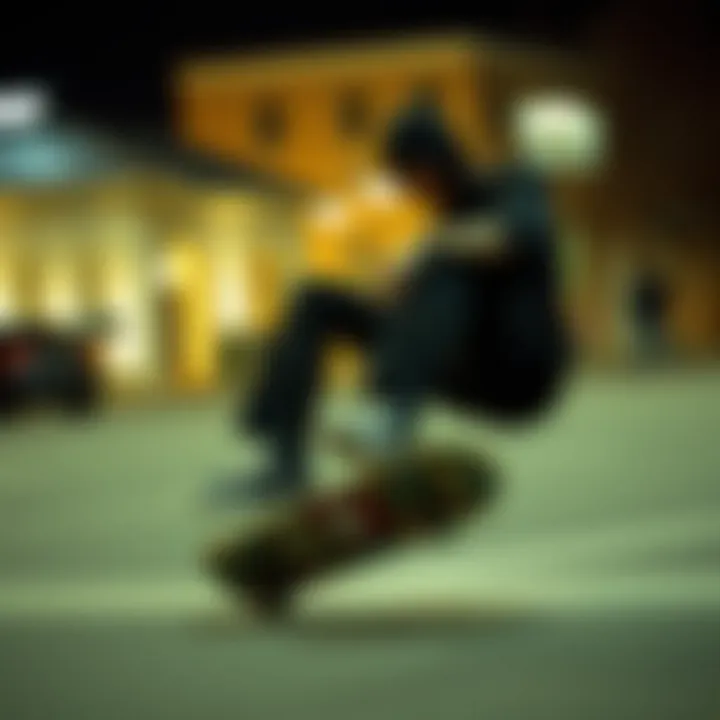
The half cab has become synonymous with style among skaters. Many trick variations that stem from the half cab have essentially created a new language in skating, providing nuances between different sub-genres and styles. Whether a skater prefers the fluid, street style of a half cab 180 or the more technical half cab flip, this trick serves as a canvas, allowing individualistic expression.
One critical aspect of its stylish portrayal addresses how it elevates a skater's presence in the skateboarding community. Doing a half cab in a video part or at the skatepark can often turn heads, becoming a true spectacle that embodies confidence and skill. Consider how certain influential skaters have incorporated the half cab into their runs:
- Tony Hawk: Known for his willingness to push boundaries, Hawk's half cab tricks often surprise and captivate audiences.
- Rodney Mullen: His innovative style and variations of half cab have influenced countless skaters, effectively shaping the community's perception of adeptness.
In essence, the half cab embodies a narrative: it's not just about flipping and turning but about making a stylistic statement within a trick that has stood the test of time.
Influence on Skateboarding Fashion and Identity
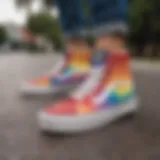
The half cab also plays a pivotal role in seasonal trends reflected within skateboarding fashion. Skaters often embrace clothing and gear that complement their style, and the half cab is no exception. Skaters tend to gravitate towards brands that celebrate this trick, further weaving it into the fabric of their identity. Shoes like the Vans Half Cab have become iconic, both in their design and the lifestyles of those who wear them. This connection shows how fashion and skateboarding share a symbiotic relationship, influencing one another in intimate and meaningful ways.
Moreover, the half cab contributes to the emerging identities of new skaters who adopt and reinterpret the trick. As novice skaters land their first half cab, they experience a transformation; they go from beginners to becoming part of a community with shared likes and experiences. This trick becomes a rite of passage, whereby mastering it often signals a deeper investment in the sport.
"It’s not just how well you can skate; it’s how you express yourself while doing it. The half cab is a part of my skate persona."
– A passionate skater on the significance of the half cab in their life
As skateboarding progresses and diversifies, the half cab will likely evolve further. However, its cultural significance is firmly rooted in the skating community, demonstrating that this seemingly simple trick houses complex layers of tradition, expression, and identity.
Half Cab in Media and Popular Culture
The half cab is not just a trick; it represents a significant cultural artifact within the realm of skateboarding. Its presence in media—particularly video parts and films—has helped to define not only the technical prowess of skaters but also the essence of skateboarding culture itself. Through the lens of various media forms, the half cab has transcended mere execution; it encapsulates identity, creativity, and the very spirit of skate culture.
The celebration of the half cab in different media also reveals its impact on the wider world. With each video part showcasing this trick, the narrative around skating evolves. Skaters of all levels connect with the power of these techniques, while filmmakers capture the raw energy and the ethos of skateboarding. In this context, the half cab becomes more than a maneuver; it turns into a symbol of freedom and individuality.
Iconic Video Parts Featuring the Half Cab
The half cab’s significance is most vividly illustrated through its appearances in iconic skate videos. Take, for example, the breathtakingly raw moments found in the video "Crossover"—an early compilation that highlights emerging talent while emphasizing the half cab's timeless appeal. The footage shows skaters meticulously landing half cabs on various terrains, whether traversing downtown streets or grinding on benches. Such settings lend a realistic yet exhilarating perspective that resonates deeply with fans and fellow skaters alike.
Other memorable appearances include the "Toy Machine’s Welcome to Hell," a compilation of trick highlights that clearly demonstrate the importance of the half cab in adapting to different environments. The contrast of slow-motion close-ups paired with rapid action sequences captures both diversity and technical proficiency.
Not to be forgotten is the impact of videos like "Pretty Sweet," where every half cab delivers a fresh twist, charm, and flair, redefining viewer expectations. These individual performances signify not only achievement but growth within the industry as well.
Representation of Half Cab in Skateboarding Films
Films focused on skateboarding have played a pivotal role in elevating the half cab within popular culture. Documentaries like "Dogtown and Z-Boys" and narratives such as "The Lords of Dogtown" emphasize how the half cab has transcended its functional roots to become emblematic of skate culture’s battle against convention. The artistry in executing the half cab captures the attention of both seasoned pros and casual viewers, establishing a deeper connection.
In more recent releases like "Minding the Gap," where multiple skaters showcase their personal struggles intertwined with the sport, the half cab serves as a visual metaphor for overcoming adversity. Its fluidity mirrors the complexities of life, illustrating resilience in the face of challenges.
The visual representation of the half cab not only highlights technical feats but also serves as a reminder of the emotional landscape within skateboarding, where each trick tells a story.
Through these cinematic lenses, the half cab illuminates the broader narratives surrounding skate culture. Its depiction fosters a sense of belonging and encourages skaters to express themselves, pushing boundaries both physically and creatively. As skateboarding continues to evolve, the half cab remains a cornerstone within media representations, highlighting its enduring relevance in uniting skaters across generations.
The Future of the Half Cab in Skateboarding
The half cab is not just a mere trick; it’s a cornerstone in the ever-evolving landscape of skateboarding. As skate culture continues to develop, the half cab is poised to adapt and maintain its relevance. It symbolizes a blend of technical skill and artistic expression, ensuring its place in the hearts of skaters. Understanding its future is crucial not only for seasoned professionals but also for newcomers who aim to embrace the rich legacy of this trick.
Evolving Techniques and Trends
In recent years, skateboarders have begun to push boundaries like never before, incorporating innovations in technique and style. One of the notable trends is the fusion of the half cab with other tricks, leading to a hybridization that enhances complexity and aesthetic appeal. Think of how the half cab is now often combined with tricks like the kickflip or even spins that involve multiple axis rotations.
- Blending Styles: The half cab is now frequently seen as a segue into other tricks, creating a seamless flow that showcases both skill and creativity.
- Tech Innovations: Skateboard design has improved tremendously, with high-tech boards offering better grip and control. These enhancements allow skaters to experiment more with their half cab execution.
- Social Media Influence: Platforms like Instagram and TikTok have given rise to a new breed of skaters who often share their unique takes on the half cab, inspiring others to adopt and reshape the trick in innovative ways.
The importance of these evolving techniques cannot be overstated; they ensure the survival of the half cab in a scene that continually craves novelty and excitement. As new generations of skaters take to the pavement, they bring fresh eyes and ideas that redefine not only the trick itself but the cultural narrative surrounding it.
Predictions for the Trick in Upcoming Competitions
Looking forward, the half cab is likely to remain a fixture in competitive settings. With competitions increasingly focusing on creativity and technical prowess, the half cab’s versatility will continue to shine.
- High Stakes Performances: As competitions like the X Games and Street League gain popularity, judges are keen to reward unique and complex maneuvers. The half cab’s foundational nature allows skaters to build upon it within their runs, making it a strategic choice.
- Judging Criteria Evolution: As the standards and criteria for judging evolve, we may see specific categories that celebrate tricks like the half cab for their historical significance as well as for their modern adaptations.
- Integration into Team Events: Team competitions might introduce collaborative runs, where skaters feed off each other's tricks. The half cab could become a signature move in teammate routines, emphasizing teamwork while still retaining individuality.
The ability of the half cab to adapt and fit within new frameworks will secure its ongoing status in the competitive skating world. As trends move towards inclusivity and innovation, skaters will keep finding ways to breathe new life into this classic move, proving that while time marches on, the essence of the half cab will endure.
"As the lines on the pavement become canvas for creativity, the half cab remains a brushstroke in the art that is skateboarding."